




ComfyUI Node: FF: Visualize Face Mask
FaceMaskVisualizer
CategoryFaceFusion
huygiatrng (Account age: 2009days) Extension
Facefusion_comfyui Latest Updated
2025-11-30 Github Stars
0.04K
How to Install Facefusion_comfyui
Install this extension via the ComfyUI Manager by searching for Facefusion_comfyui- 1. Click the Manager button in the main menu
- 2. Select Custom Nodes Manager button
- 3. Enter Facefusion_comfyui in the search bar
Visit ComfyUI Online for ready-to-use ComfyUI environment
- Free trial available
- 16GB VRAM to 80GB VRAM GPU machines
- 400+ preloaded models/nodes
- Freedom to upload custom models/nodes
- 200+ ready-to-run workflows
- 100% private workspace with up to 200GB storage
- Dedicated Support
FF: Visualize Face Mask Description
Visualizes face masks for AI image tasks, supporting multiple models and detailed analysis.
FF: Visualize Face Mask:
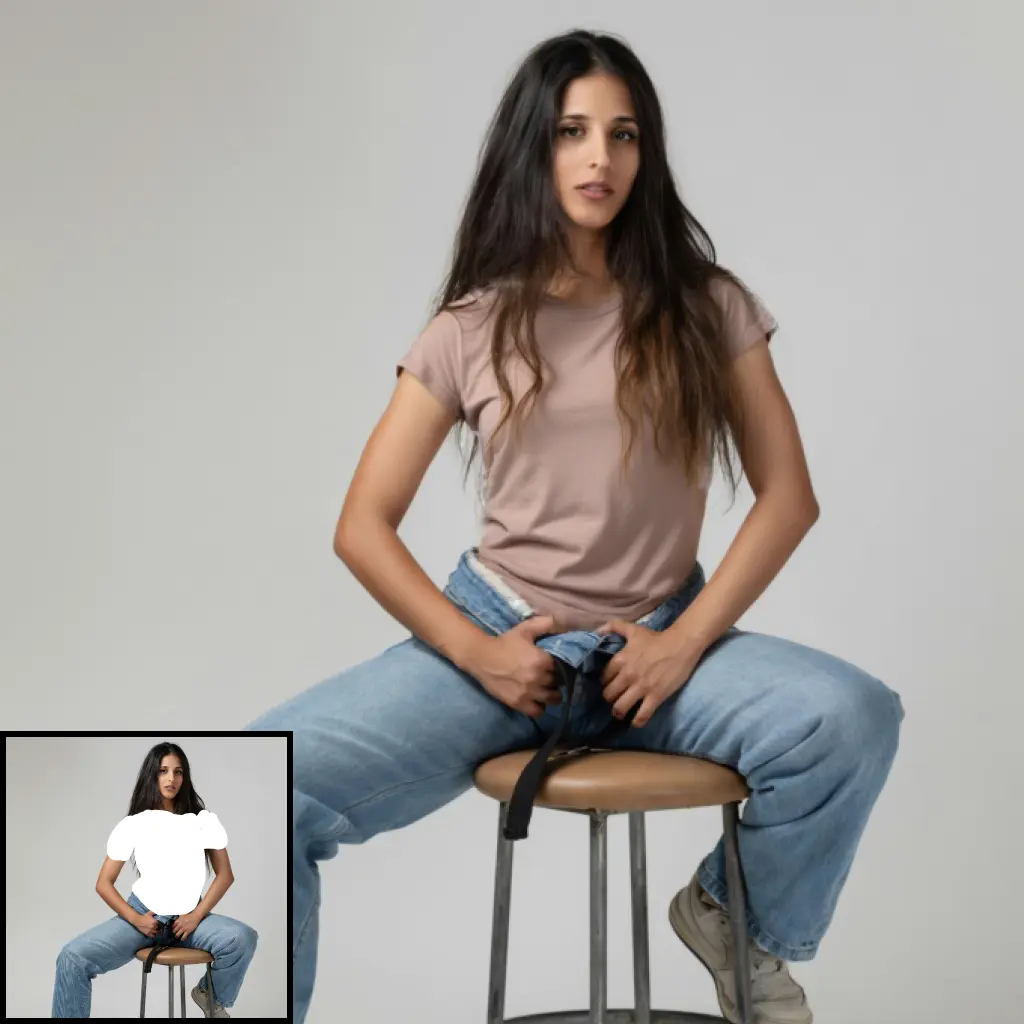
The FaceMaskVisualizer node is designed to provide a visual representation of face masks, which are crucial in various AI-driven image processing tasks, such as face swapping, occlusion handling, and facial feature analysis. This node allows you to visualize masks generated by different models, including occluder and parser masks, and offers the flexibility to combine these masks for more comprehensive analysis. By transforming these masks into visual formats like heatmaps or overlays, the node helps you better understand the areas of interest on a face, facilitating more informed decisions in your creative processes. The node's ability to handle multiple faces and provide detailed visual feedback makes it an invaluable tool for AI artists looking to enhance their projects with precise facial data manipulation.
FF: Visualize Face Mask Input Parameters:
face_data
This parameter represents the input data containing the image and detected faces. It is essential for the node to know which faces to process and visualize. The face_data should include the image tensor and a list of detected faces, each with its landmarks. This parameter is crucial as it forms the basis for mask creation and visualization.
mask_type
The mask_type parameter determines the type of mask to be visualized. It can be set to occluder, parser, or combined, with the default being occluder. This choice affects how the masks are generated and combined, influencing the final visualization. Selecting the appropriate mask type is vital for achieving the desired visual output.
face_occluder_model
This parameter specifies the model used to create occluder masks. Options include none, xseg_1, xseg_2, and xseg_3, with xseg_1 as the default. The choice of model impacts the accuracy and style of the occluder mask, which is important for tasks requiring precise occlusion handling.
face_parser_model
The face_parser_model parameter defines the model used for generating parser masks. Available options are none, bisenet_resnet_18, and bisenet_resnet_34, with bisenet_resnet_34 as the default. This parameter influences the detail and accuracy of the parser mask, which is crucial for applications needing detailed facial feature analysis.
process_mode
This parameter controls whether the node processes a single face or all detected faces. It can be set to single or all, with all as the default. The process_mode affects the scope of the visualization, allowing you to focus on individual faces or analyze multiple faces simultaneously.
face_index
The face_index parameter is used when process_mode is set to single, specifying which face to process. It is an integer with a default value of 0, a minimum of 0, and a maximum of 100. This parameter is important for targeting specific faces in images with multiple detected faces.
visualization_mode
This parameter determines how the mask is visualized, with options including heatmap, overlay, and mask_only, and overlay as the default. The choice of visualization mode affects the appearance of the output, allowing you to tailor the visual feedback to your specific needs.
overlay_alpha
The overlay_alpha parameter controls the transparency of the overlay in the visualization, with a default value of 0.5, a minimum of 0.0, and a maximum of 1.0. This parameter is crucial for adjusting the visibility of the mask in relation to the original image, enhancing the clarity of the visualization.
FF: Visualize Face Mask Output Parameters:
IMAGE
The output of the FaceMaskVisualizer node is an image tensor that represents the visualized mask. This output can be a single image or a batch of images, depending on the number of faces processed. The visualized mask provides a clear representation of the areas of interest on the face, aiding in tasks that require detailed facial analysis and manipulation.
FF: Visualize Face Mask Usage Tips:
- To achieve the best results, choose the
mask_typethat aligns with your specific task, whether it's occlusion handling or detailed facial feature analysis. - Adjust the
overlay_alphato balance the visibility of the mask with the original image, ensuring that the visualization is clear and informative. - Use the
process_modeto focus on individual faces when needed, especially in images with multiple detected faces, to avoid overwhelming visualizations.
FF: Visualize Face Mask Common Errors and Solutions:
No faces in face_data
- Explanation: This error occurs when the
face_datainput does not contain any detected faces. - Solution: Ensure that the
face_dataincludes a list of detected faces before passing it to the node.
Face index <face_index> out of range (only <number_of_faces> faces detected)
- Explanation: This error happens when the specified
face_indexexceeds the number of detected faces. - Solution: Verify that the
face_indexis within the range of detected faces and adjust it accordingly.
No mask created for face <idx>
- Explanation: This message indicates that no mask was generated for a specific face, possibly due to missing landmarks or model issues.
- Solution: Check the face data for completeness, including landmarks, and ensure that the selected models are correctly configured.
No masks created
- Explanation: This error suggests that the node failed to generate any masks, possibly due to incorrect model settings or input data issues.
- Solution: Review the input parameters and model configurations to ensure they are set correctly and that the input data is valid.
FF: Visualize Face Mask Related Nodes

RunComfy is the premier ComfyUI platform, offering ComfyUI online environment and services, along with ComfyUI workflows featuring stunning visuals. RunComfy also provides AI Models, enabling artists to harness the latest AI tools to create incredible art.