



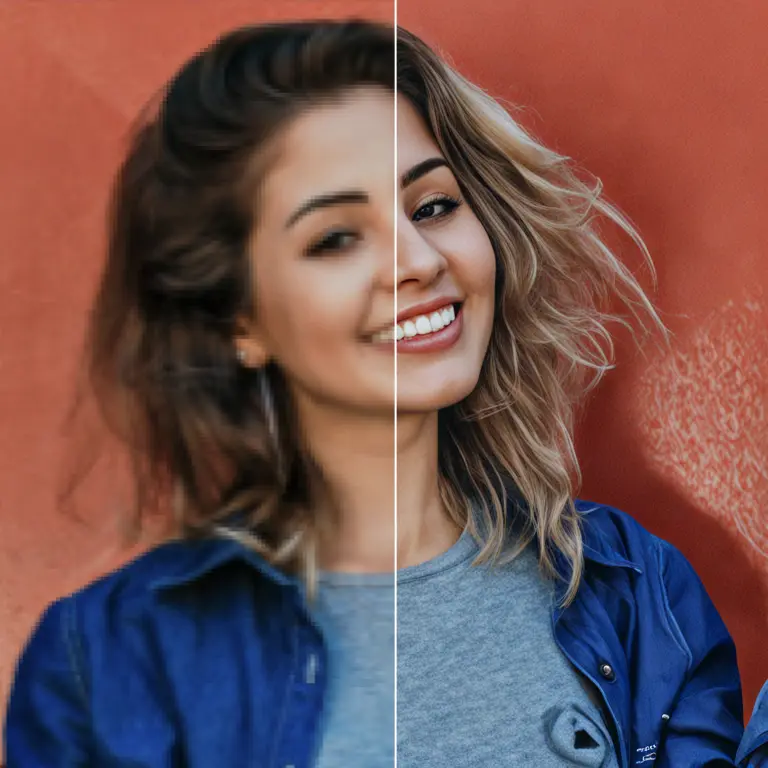
H3 Latent Upscale (video only, audio kept) [experimental]:
The H3LatentUpscale node is designed to upscale the spatial dimensions of the video component within an H3 latent, which is a nested structure containing both audio and video data. This node specifically targets the height and width of the video frames, leaving the audio component untouched and bit-exact. By operating directly on the latent representation, it avoids the need for decoding and re-encoding, which can introduce artifacts and degrade quality. This approach allows for efficient upscaling while maintaining the integrity of the original audio. The node supports different upscaling methods, such as bilinear and nearest-exact, providing flexibility in how the video is resized. It ensures that the resulting dimensions conform to a legal grid, where each latent cell corresponds to 16 image pixels, and frames are rounded to even numbers of cells. This node is particularly useful for AI artists who want to enhance video resolution without compromising audio quality or introducing unnecessary processing steps.
H3 Latent Upscale (video only, audio kept) [experimental] Input Parameters:
samples
This parameter represents the input latent data, which includes both video and audio components. The video is stored as a nested tensor with dimensions corresponding to batch size, channels, time, height, and width. The audio component is also included but remains unchanged during the upscaling process. The input latent data serves as the basis for the upscaling operation, and its structure is crucial for the node's functionality.
upscale_method
This parameter determines the method used for upscaling the video component. Options include "bilinear" and "nearest-exact," each offering different characteristics. Bilinear interpolation provides smoother transitions between pixels, which can result in a softer image, while nearest-exact replicates pixel values, creating a blocky effect that preserves sharp edges. The choice of method affects the visual quality of the upscaled video and should be selected based on the desired outcome.
scale
This parameter specifies the scaling factor for the video dimensions. It is a floating-point value that determines how much the height and width of the video frames will be increased. The default value is 2.0, meaning the video dimensions will be doubled. The scale factor is applied unless specific width and height values are provided, in which case those values take precedence. The scale parameter allows for flexible resizing based on the user's needs.
width
This parameter allows for explicit specification of the target width for the video frames. If set to a nonzero value, it overrides the scaling factor for the width dimension. This provides precise control over the final width of the video, ensuring it meets specific requirements. The width must be a multiple of 32 pixels to conform to the legal grid, and any odd values will be adjusted accordingly.
height
Similar to the width parameter, this allows for explicit specification of the target height for the video frames. A nonzero value overrides the scaling factor for the height dimension, providing precise control over the final height. The height must also be a multiple of 32 pixels, and any odd values will be adjusted to fit the legal grid. This parameter is useful for achieving specific aspect ratios or resolutions.
H3 Latent Upscale (video only, audio kept) [experimental] Output Parameters:
samples
The output parameter samples contains the upscaled video component along with the untouched audio component. The video frames have increased spatial dimensions based on the specified scaling factor or explicit width and height values. The audio remains bit-exact, ensuring no loss in quality. This output allows for further processing or direct use in applications where enhanced video resolution is desired without altering the audio.
report
The report provides a summary of the upscaling operation, including details about the changes made to the video dimensions and confirmation that the audio was passed through unchanged. This information is useful for verifying the results of the upscaling process and ensuring that the operation was performed as expected.
H3 Latent Upscale (video only, audio kept) [experimental] Usage Tips:
- Use the "bilinear" method for smoother video transitions, especially when upscaling by larger factors, to avoid blocky artifacts.
- Opt for the "nearest-exact" method if you want to preserve sharp edges and details in the video, as it replicates pixel values exactly.
- When specific dimensions are required, set the width and height parameters to override the scale factor, ensuring the video meets your exact resolution needs.
- Keep in mind that the node operates on a legal grid, so ensure your target dimensions are multiples of 32 pixels to avoid unexpected snapping.
H3 Latent Upscale (video only, audio kept) [experimental] Common Errors and Solutions:
"Invalid scale factor"
- Explanation: The scale factor provided is outside the acceptable range.
- Solution: Ensure the scale factor is between 0.01 and 8.0, as values outside this range are not supported.
"Width or height not a multiple of 32"
- Explanation: The specified width or height does not conform to the legal grid requirements.
- Solution: Adjust the width and height to be multiples of 32 pixels to ensure compatibility with the node's grid snapping mechanism.
"Audio component missing"
- Explanation: The input latent data does not contain an audio component, which is expected by the node.
- Solution: Verify that the input data includes both video and audio components, or use a plain video latent if audio is not required.