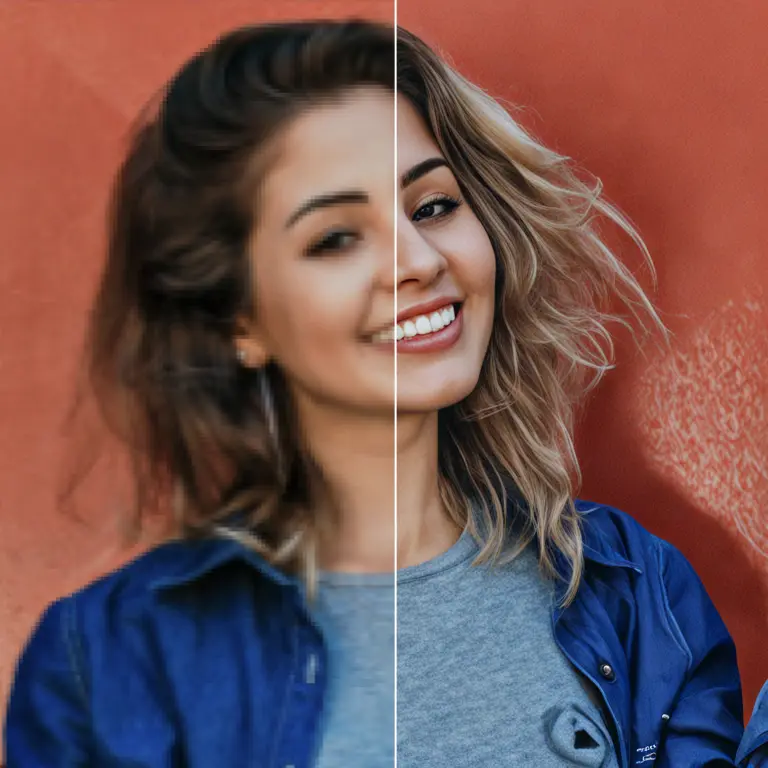
Hildegard Combine:
Hildegard Combine is a node designed to integrate and synthesize various image components processed through the Hildegard system. Its primary purpose is to take the outputs from different stages of the Hildegard pipeline, such as the reference latents generated by the Hildegard References Split node, and combine them into a cohesive final image. This node is essential for reconstructing the upscaled image by intelligently merging the processed tiles and reference data, ensuring that the final output maintains high quality and consistency. By leveraging the encoded latents and spatial information, Hildegard Combine effectively reconstructs the image with enhanced detail and texture, making it a crucial component in the image refinement process.
Hildegard Combine Input Parameters:
image
This parameter represents the upscaled image input from the Hildegard Plan. It serves as the base image that will be processed and refined through the combination of reference latents. The quality and resolution of this input image directly impact the final output, as it forms the foundation upon which the node operates.
dac_data
The dac_data input carries essential metadata from the Hildegard Plan, including the tile grid, overlaps, and ordering that the node must adhere to. This data ensures that the combination process respects the spatial arrangement and sequence determined in earlier stages, allowing for accurate reconstruction of the image.
vae
This parameter specifies the Variational Autoencoder (VAE) used to encode the reference image types into latents. The choice of VAE affects the encoding quality and, consequently, the detail and texture of the final image. For instance, using the Klein VAE with FLUX.2 Klein ensures compatibility and optimal performance.
tile
The tile parameter determines which tiles in the grid are processed. A value of 0 indicates that all tiles will be processed, resulting in a list of outputs corresponding to each tile. A value greater than or equal to 1 specifies a single tile to process, following the linear or spiral ordering from the Hildegard Plan. This allows for targeted refinement of specific image sections.
cell_size
This parameter defines the side length in pixels of each cell in the 3x3 position map. The final position image is cell_size x 3 on each axis. A larger cell size provides more spatial context detail, resulting in a larger position latent. The default value of 512 is recommended for maintaining a balance between detail and processing efficiency.
low_freq_radius
The low_freq_radius parameter sets the Gaussian-blur radius in pixels, which defines the cutoff between low and high frequencies for tile high-frequency reduction. A larger radius means more of the source's detail is classified as low frequency and preserved, while a smaller radius results in only the broadest shapes surviving, with the model regenerating other details. The default value is 256.0, providing a balanced approach to detail preservation and regeneration.
Hildegard Combine Output Parameters:
combined_image
The combined_image output is the final reconstructed image that results from the combination of the input image and reference latents. This output is the culmination of the Hildegard refinement process, showcasing enhanced detail, texture, and overall image quality. It represents the successful integration of all processed components into a single, cohesive image.
Hildegard Combine Usage Tips:
- Ensure that the input image is of high quality and resolution to maximize the effectiveness of the refinement process.
- Use the default
cell_sizeandlow_freq_radiusvalues for a balanced approach, but adjust them if specific spatial detail or texture regeneration is required. - When focusing on specific areas of an image, use the
tileparameter to process individual tiles, allowing for targeted refinement.
Hildegard Combine Common Errors and Solutions:
"Invalid VAE configuration"
- Explanation: This error occurs when the specified VAE is incompatible with the input data or the Hildegard system.
- Solution: Ensure that the correct VAE is selected, such as the Klein VAE for FLUX.2 Klein, and verify its compatibility with the input data.
"Tile index out of range"
- Explanation: This error indicates that the specified tile index exceeds the available range of tiles in the grid.
- Solution: Check the
dac_datafor the correct number of tiles and ensure thetileparameter is set within the valid range.
"Missing dac_data input"
- Explanation: This error arises when the
dac_datainput is not provided, preventing the node from accessing necessary metadata. - Solution: Ensure that the
dac_datainput is correctly connected and contains the required metadata for processing.