



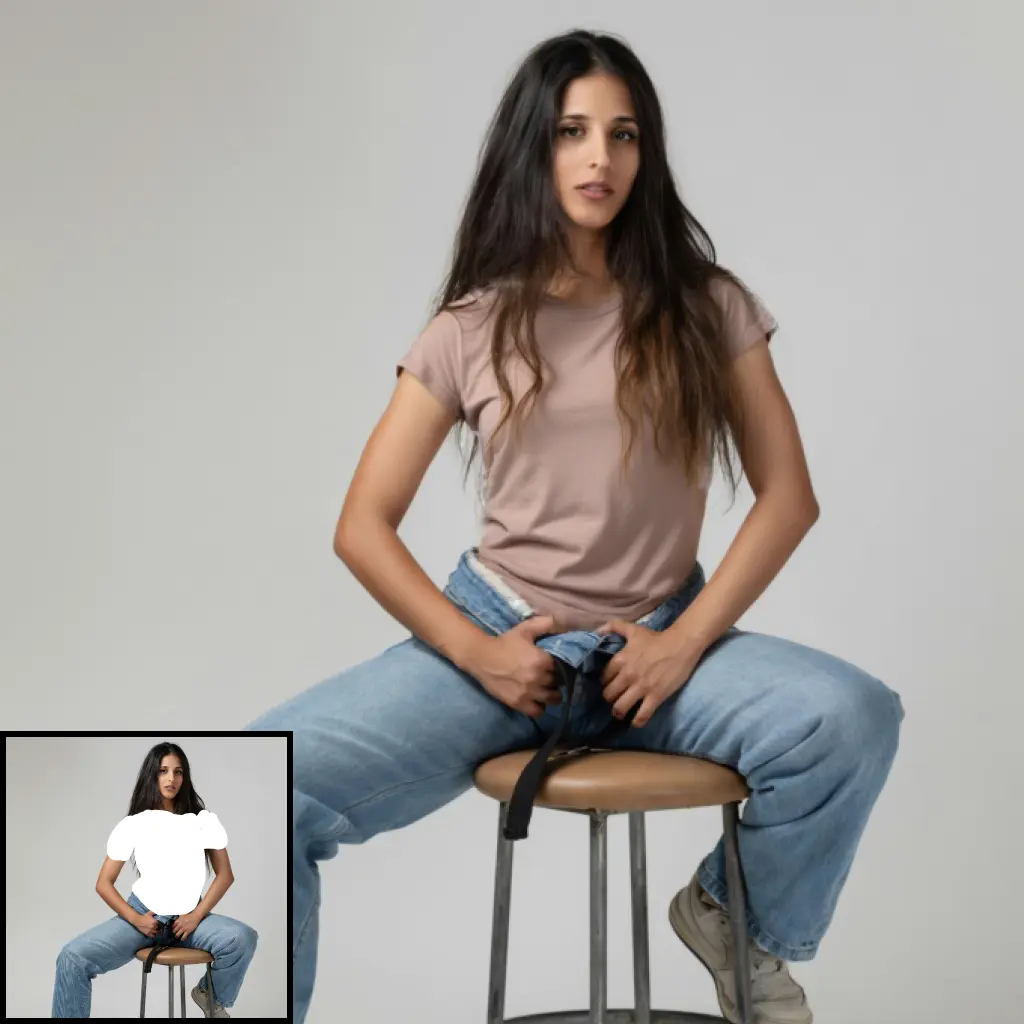
Mask to SAM3 Box:
The 1hew_MaskToSam3Box node is designed to convert a given mask into bounding box prompts suitable for use with the SAM3 (Segment Anything Model 3) framework. This node is particularly useful for AI artists who need to transform mask data into a format that can be easily interpreted by machine learning models for tasks such as object detection or segmentation. By processing the mask data, the node generates bounding boxes that encapsulate the areas of interest within the mask, allowing for more precise and efficient model training or inference. The node offers flexibility in how these bounding boxes are generated, either by merging all detected regions into a single box or by creating separate boxes for each distinct region. This capability is essential for artists and developers looking to streamline their workflow and enhance the accuracy of their AI models.
Mask to SAM3 Box Input Parameters:
mask
The mask parameter is a tensor that represents the input mask data. This mask is used to identify the regions of interest that will be converted into bounding boxes. The mask should be a 2D or 3D tensor, where each element indicates whether a particular pixel is part of the region of interest. The mask's dimensions directly impact the size and number of bounding boxes generated. There are no specific minimum or maximum values for this parameter, but it should be a valid tensor that the node can process.
condition
The condition parameter determines the labeling of the generated bounding boxes. It accepts two options: "positive" and "negative". When set to "positive", the bounding boxes are labeled as positive regions, indicating areas of interest. Conversely, when set to "negative", the boxes are labeled as negative regions. This parameter influences how the bounding boxes are interpreted by subsequent processes or models. The default value is "positive".
output_mode
The output_mode parameter specifies how the bounding boxes should be generated from the mask. It offers two options: "merge" and "separate". In "merge" mode, all detected regions within the mask are combined into a single bounding box, which is useful for simplifying the output when multiple regions are closely located. In "separate" mode, each distinct region within the mask is converted into its own bounding box, providing a more detailed representation of the mask's contents. The default value is "merge".
Mask to SAM3 Box Output Parameters:
SAM3_BOXES_PROMPT
The SAM3_BOXES_PROMPT output parameter provides the generated bounding box prompts in a format compatible with the SAM3 framework. This output consists of a list of dictionaries, each containing the bounding boxes and their corresponding labels. The bounding boxes are represented in a normalized format, making them ready for use in AI models that require input in this specific structure. This output is crucial for integrating the node's functionality into larger workflows involving object detection or segmentation tasks.
Mask to SAM3 Box Usage Tips:
- To achieve the best results when using the
1hew_MaskToSam3Boxnode, ensure that your input mask is well-defined and accurately represents the regions of interest. This will help in generating precise bounding boxes. - Experiment with the
output_modeparameter to see which setting best suits your needs. Use "merge" for a simplified output when regions are close together, and "separate" for detailed outputs when distinct regions need to be individually identified.
Mask to SAM3 Box Common Errors and Solutions:
Invalid mask tensor
- Explanation: This error occurs when the input mask is not a valid tensor or does not have the correct dimensions.
- Solution: Ensure that the mask is a 2D or 3D tensor and that it is properly formatted before passing it to the node.
No regions detected in mask
- Explanation: This error happens when the mask does not contain any regions that can be converted into bounding boxes.
- Solution: Verify that the mask correctly highlights the regions of interest and that the thresholding is set appropriately to detect these regions.
Output mode not recognized
- Explanation: This error arises when an invalid value is provided for the
output_modeparameter. - Solution: Check that the
output_modeis set to either "merge" or "separate" and that there are no typos in the parameter value.