



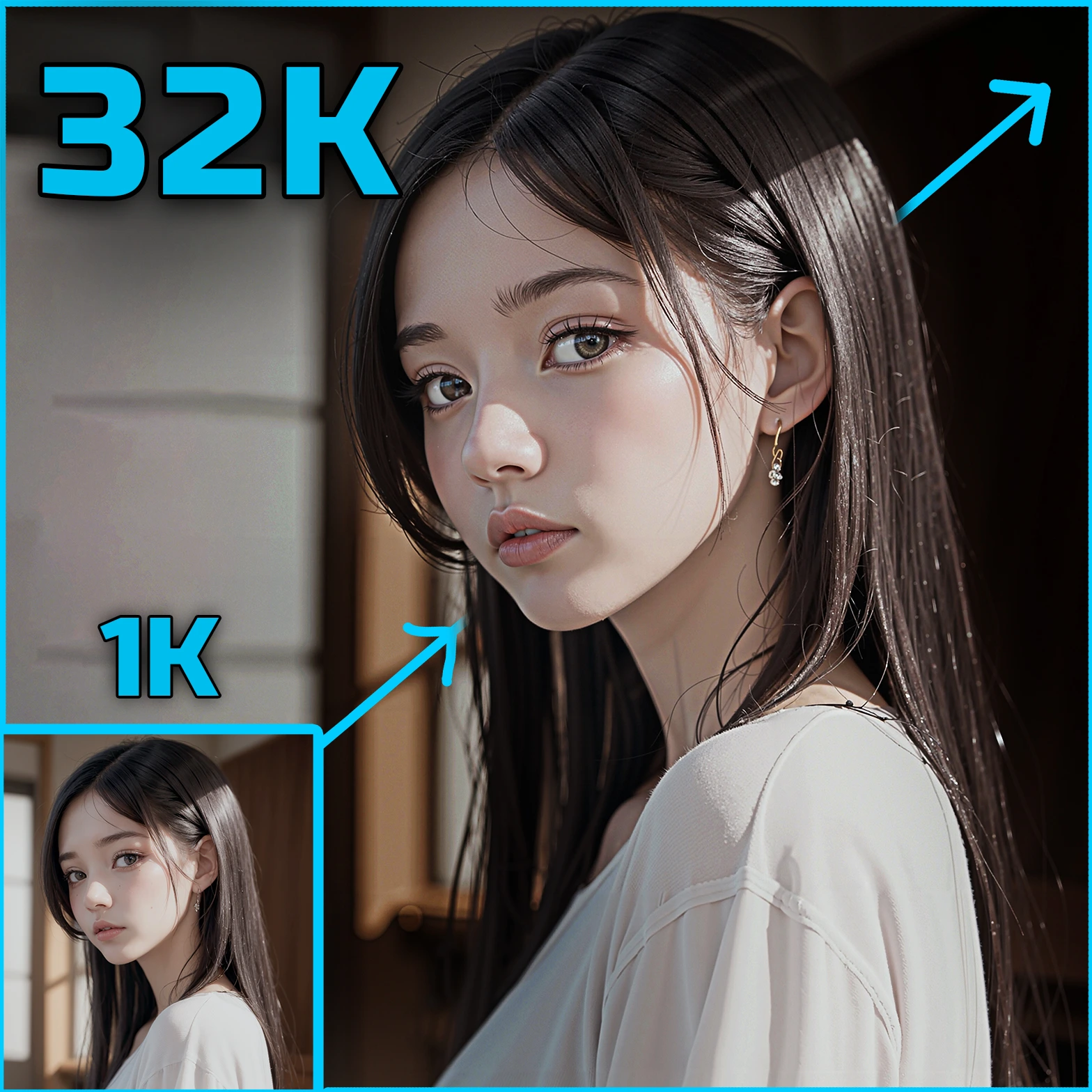
🚀 Universal NN Latent Upscale *DRE:
The UniversalNNLatentUpscale_DRE node is a sophisticated tool designed to enhance the resolution of latent representations in diffusion models, specifically supporting SD1.5, SDXL, Flux, and Wan2.2 architectures. This node leverages advanced neural network techniques to upscale latent images, thereby improving the quality and detail of generated outputs. By integrating universal model support and improved training methodologies, it offers a versatile solution for AI artists looking to refine their creations. The node is based on the foundational work by Ttl and extends its capabilities to accommodate a broader range of models, ensuring compatibility and high performance across different architectures. Its primary goal is to provide seamless and efficient upscaling, making it an essential component for artists seeking to enhance the visual fidelity of their AI-generated art.
🚀 Universal NN Latent Upscale *DRE Input Parameters:
in_channels
This parameter specifies the number of input channels for the latent images. It determines how many channels the input latent representation will have, which is crucial for the encoder to correctly process the input data. The default value is typically set to 4, aligning with common latent space configurations in diffusion models.
out_channels
This parameter defines the number of output channels for the upscaled latent images. It ensures that the output retains the necessary channel information for further processing or visualization. Like the input channels, the default is usually set to 4 to maintain consistency with the input configuration.
hidden_dim
The hidden dimension parameter controls the size of the intermediate feature maps within the neural network. It impacts the model's capacity to learn and represent complex features during the upscaling process. A typical default value is 128, providing a balance between computational efficiency and model performance.
🚀 Universal NN Latent Upscale *DRE Output Parameters:
samples
The samples output parameter contains the upscaled latent images. This output is crucial as it represents the enhanced version of the input latents, now at a higher resolution and ready for further processing or final rendering. The upscaled latents maintain the original structure but with improved detail and clarity, making them suitable for high-quality AI art generation.
🚀 Universal NN Latent Upscale *DRE Usage Tips:
- Ensure that the input latent images are correctly normalized before processing to achieve optimal upscaling results.
- Utilize the node's compatibility with multiple model architectures to experiment with different styles and outputs, enhancing the versatility of your AI art projects.
- Consider adjusting the
hidden_dimparameter if you require more detailed feature extraction, but be mindful of the increased computational load.
🚀 Universal NN Latent Upscale *DRE Common Errors and Solutions:
Model weight file not found
- Explanation: This error occurs when the node cannot locate the necessary model weight files in the specified directory.
- Solution: Verify that the model weight files are correctly placed in the
modelsdirectory within the node's local directory. Ensure the file names match those expected by the node.
Latent upscaling failed
- Explanation: This error indicates a failure during the upscaling process, possibly due to incompatible input dimensions or corrupted model weights.
- Solution: Check the input dimensions to ensure they match the expected format. If the issue persists, consider re-downloading the model weights to ensure they are not corrupted.