



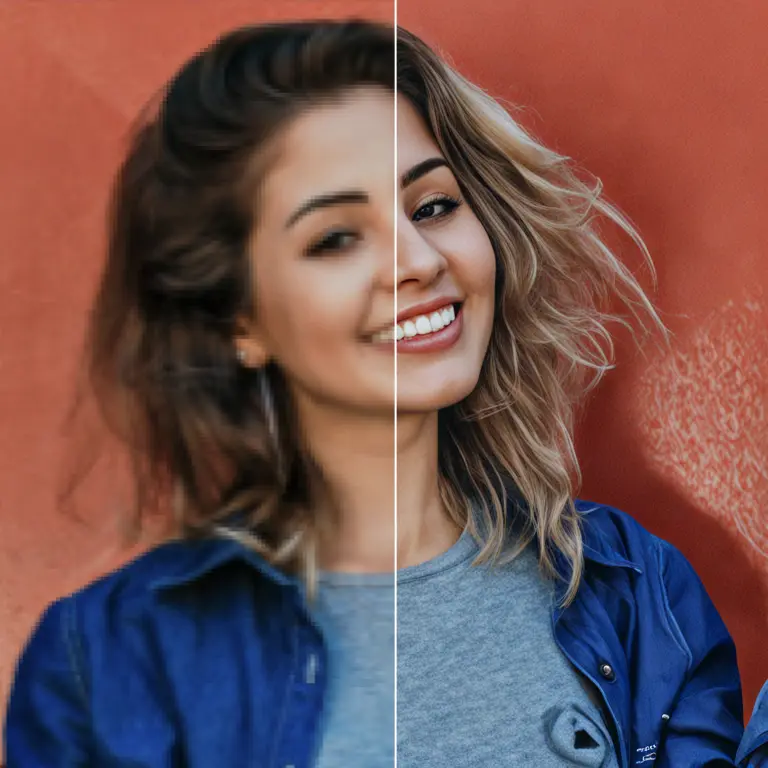
VAE Encode (for Inpainting):
The VAEEncodeForInpaint node is designed to facilitate the inpainting process by encoding images into a latent space representation using a Variational Autoencoder (VAE). This node is particularly useful for tasks that involve filling in missing or corrupted parts of an image. By leveraging the VAE's ability to encode and decode images, this node helps in generating a latent representation that can be used to seamlessly blend the inpainted regions with the original image. The primary goal of this node is to ensure that the inpainted areas are consistent with the surrounding context, thereby producing visually coherent results.
VAE Encode (for Inpainting) Input Parameters:
positive
This parameter represents the positive conditioning input, which is used to guide the encoding process. It typically contains information that positively influences the inpainting outcome, ensuring that the generated latent representation aligns with the desired attributes.
negative
This parameter represents the negative conditioning input, which is used to guide the encoding process by providing information that should be avoided in the inpainting outcome. It helps in refining the latent representation by excluding undesirable attributes.
pixels
This parameter is the input image that needs to be encoded. It is a 4-dimensional tensor representing the image data, where the first three channels correspond to the RGB values. The image is processed to generate a latent representation that can be used for inpainting.
vae
This parameter is the Variational Autoencoder (VAE) model used for encoding the image. The VAE is responsible for transforming the input image into a latent space representation, which is crucial for the inpainting process.
mask
This parameter is a binary mask that indicates the regions of the image that need to be inpainted. The mask helps in identifying the areas that require modification, ensuring that the inpainting process is focused on the correct regions.
VAE Encode (for Inpainting) Output Parameters:
samples
This output parameter contains the latent representation of the original image. It is a dictionary with the key "samples" that holds the encoded latent space data, which can be used for further processing or decoding.
noise_mask
This output parameter contains the noise mask, which is a binary mask indicating the regions of the latent space that correspond to the inpainted areas. It helps in identifying the modified regions in the latent representation.
VAE Encode (for Inpainting) Usage Tips:
- Ensure that the input image (
pixels) is preprocessed correctly and is in the expected format to achieve optimal encoding results. - Use appropriate positive and negative conditioning inputs to guide the inpainting process effectively, ensuring that the desired attributes are emphasized while undesirable ones are excluded.
- Adjust the mask parameter carefully to accurately define the regions that need inpainting, as this will directly impact the quality of the inpainted output.
VAE Encode (for Inpainting) Common Errors and Solutions:
"Input image dimensions are not compatible with VAE downscale ratio"
- Explanation: This error occurs when the input image dimensions are not multiples of the VAE's downscale ratio, leading to misalignment during encoding.
- Solution: Ensure that the input image dimensions are adjusted to be multiples of the VAE's downscale ratio before passing them to the node.
"Mask dimensions do not match input image dimensions"
- Explanation: This error occurs when the dimensions of the mask do not match the dimensions of the input image, causing issues during the encoding process.
- Solution: Resize the mask to match the dimensions of the input image using appropriate interpolation methods before passing it to the node.
"VAE model not provided"
- Explanation: This error occurs when the VAE model parameter is missing or not correctly specified, preventing the encoding process from being executed.
- Solution: Ensure that a valid VAE model is provided as an input parameter to the node.
"Invalid conditioning inputs"
- Explanation: This error occurs when the positive or negative conditioning inputs are not correctly formatted or contain invalid data.
- Solution: Verify that the conditioning inputs are correctly formatted and contain valid data that aligns with the expected structure.