



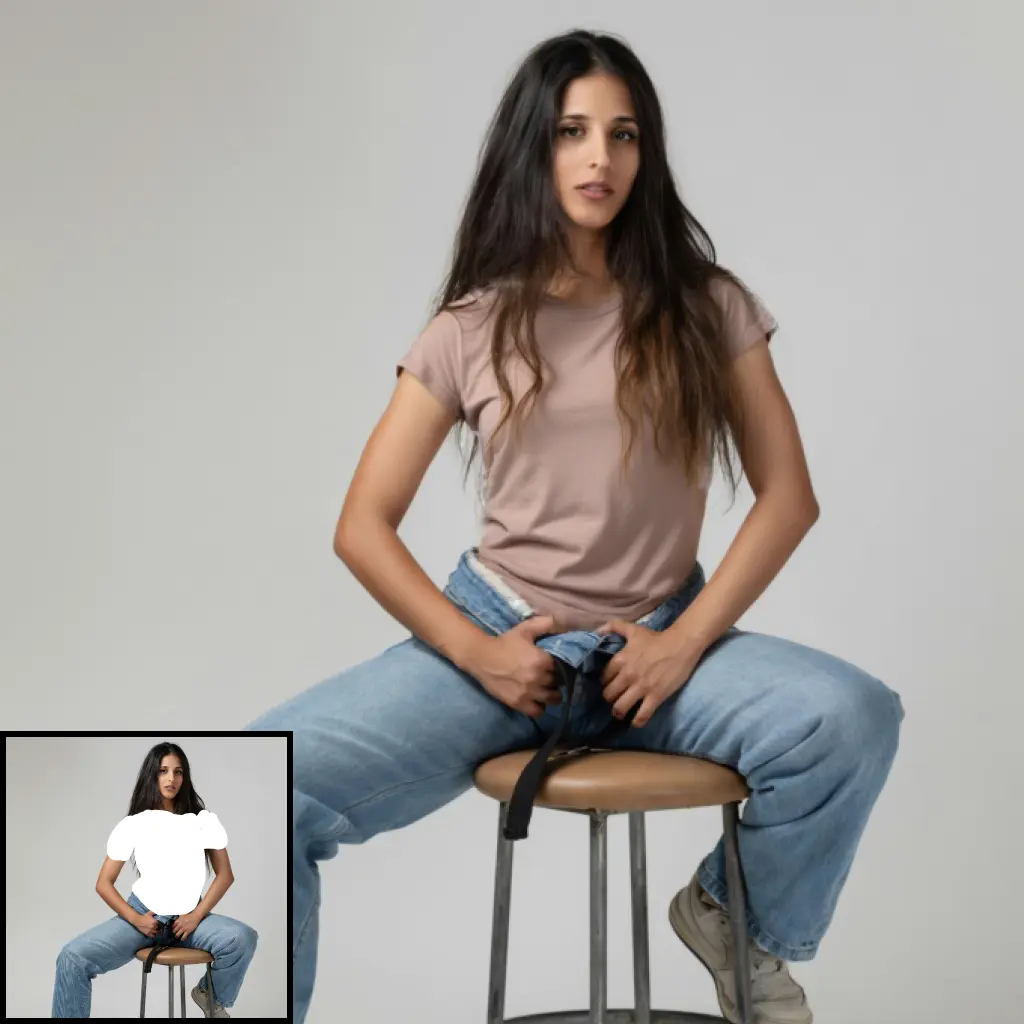
ComfyUI Node: Eses Lens Effects
EsesImageLensEffects
CategoryEses Nodes/Image Adjustments
quasiblob (Account age: 3827days) Extension
ComfyUI-EsesImageLensEffects Latest Updated
2025-07-10 Github Stars
0.02K
How to Install ComfyUI-EsesImageLensEffects
Install this extension via the ComfyUI Manager by searching for ComfyUI-EsesImageLensEffects- 1. Click the Manager button in the main menu
- 2. Select Custom Nodes Manager button
- 3. Enter ComfyUI-EsesImageLensEffects in the search bar
Visit ComfyUI Online for ready-to-use ComfyUI environment
- Free trial available
- 16GB VRAM to 80GB VRAM GPU machines
- 400+ preloaded models/nodes
- Freedom to upload custom models/nodes
- 200+ ready-to-run workflows
- 100% private workspace with up to 200GB storage
- Dedicated Support
Eses Lens Effects Description
Simulate lens distortion and chromatic aberration effects for artistic visual enhancement.
Eses Lens Effects:
The EsesImageLensEffects node is designed to simulate lens distortion and chromatic aberration effects on images, providing a realistic and artistic touch to your visual projects. This node allows you to apply a master distortion effect, which can be either barrel or pincushion, to the entire image. Additionally, it offers the ability to introduce channel-specific aberrations, creating a color fringing effect that mimics the imperfections found in real-world lenses. By independently distorting each of the red, green, and blue channels and then recombining them, the node produces a final image with enhanced depth and visual interest. This process is further refined by controlling the distortion profile, interpolation quality, and edge handling, ensuring smooth and high-quality results. The EsesImageLensEffects node is a powerful tool for artists looking to add a layer of authenticity and complexity to their digital images.
Eses Lens Effects Input Parameters:
k1_master_distortion
This parameter controls the primary strength and direction of the lens distortion applied to the entire image. A positive value results in a barrel distortion, while a negative value creates a pincushion effect. The range of values can vary, but typically, small values are used to achieve subtle effects, while larger values can create more pronounced distortions.
k1_red_aberration
This parameter acts as a delta or offset from the master distortion specifically for the red channel, introducing chromatic aberration. It allows you to adjust the amount of color fringing for the red channel, enhancing the realism of the lens effect. The range of values is similar to the master distortion, with small adjustments often being sufficient.
k1_green_aberration
Similar to the red aberration, this parameter adjusts the chromatic aberration for the green channel. It provides control over the color fringing effect for the green channel, allowing for fine-tuning of the overall image appearance. The range and impact are consistent with the other aberration parameters.
k1_blue_aberration
This parameter controls the chromatic aberration for the blue channel, acting as an offset from the master distortion. It enables you to fine-tune the color fringing effect for the blue channel, contributing to the overall lens effect. The range and typical usage are in line with the other channel-specific aberrations.
radial_exponent
This parameter adjusts how quickly the distortion effect increases from the center of the image towards the edges. A higher value results in a more rapid increase in distortion, while a lower value provides a more gradual effect. This allows for customization of the distortion profile to match specific artistic goals.
offset_x_red, offset_y_red
These parameters specify the horizontal and vertical offsets for the red channel, allowing for precise control over the position of the chromatic aberration effect. Adjusting these values can help align the distortion effect with specific image features.
offset_x_green, offset_y_green
These parameters function similarly to the red offsets but apply to the green channel. They provide control over the positioning of the chromatic aberration effect for the green channel, enabling detailed adjustments to the image.
offset_x_blue, offset_y_blue
These parameters control the horizontal and vertical offsets for the blue channel, allowing for precise positioning of the chromatic aberration effect. They enable fine-tuning of the blue channel's distortion to achieve the desired visual outcome.
post_process_scale
This parameter determines the scaling factor applied during post-processing. A value of 1.0 means no scaling, while other values can be used to zoom in or out of the image. This is useful for adjusting the final image size after applying the lens effects.
vignette_amount
This parameter controls the intensity of the vignette effect applied as the final step. A higher value results in a more pronounced vignette, darkening the image edges to draw attention to the center.
vignette_size
This parameter specifies the size of the vignette effect, determining how far it extends from the image edges towards the center. Adjusting this value allows for customization of the vignette's reach and impact.
vignette_falloff
This parameter controls the rate at which the vignette effect fades from the edges to the center. A higher value results in a sharper transition, while a lower value provides a more gradual fade.
fit_vignette_to_frame
This boolean parameter determines whether the vignette effect should be adjusted to fit the image frame. Enabling this option ensures that the vignette aligns with the image dimensions, providing a consistent effect.
interpolation_mode
This parameter selects the resampling method used during image processing. Options typically include methods like bicubic or bilinear, with bicubic often providing smoother results.
fill_mode
This parameter determines how new pixels at the image boundaries are handled during distortion. Options may include filling with a specific color or repeating edge pixels, affecting the appearance of the image edges.
channel_fill_color
This parameter specifies the color used to fill new pixels created at the image boundaries. It allows for customization of the edge appearance, ensuring a seamless integration of the distortion effect.
Eses Lens Effects Output Parameters:
IMAGE
The output of the EsesImageLensEffects node is the processed image with the applied lens distortion and chromatic aberration effects. This image reflects the combined impact of all input parameters, showcasing the desired artistic enhancements. The output is typically in the same format as the input image, ready for further processing or final use.
Eses Lens Effects Usage Tips:
- Experiment with small values for
k1_master_distortionto achieve subtle lens effects that enhance realism without overwhelming the image. - Use channel-specific aberrations to introduce color fringing that mimics real-world lens imperfections, adding depth and interest to your images.
- Adjust the
radial_exponentto control the distortion profile, tailoring the effect to match the artistic style or mood you aim to achieve. - Consider using the vignette parameters to draw attention to the image center, enhancing the focal point and overall composition.
Eses Lens Effects Common Errors and Solutions:
Image Distortion Appears Too Strong
- Explanation: The distortion parameters may be set too high, resulting in an overwhelming effect.
- Solution: Reduce the values of
k1_master_distortionand channel-specific aberrations to achieve a more balanced and subtle effect.
Color Fringing Is Misaligned
- Explanation: The offset parameters for the channels may not be correctly set, causing misalignment.
- Solution: Adjust the
offset_xandoffset_yparameters for each channel to align the color fringing with the image features.
Vignette Effect Is Not Visible
- Explanation: The vignette parameters may be set too low, or the vignette may not fit the image frame.
- Solution: Increase the
vignette_amountand ensurefit_vignette_to_frameis enabled to enhance the vignette visibility.
Image Edges Look Unnatural
- Explanation: The fill mode or channel fill color may not be suitable for the image.
- Solution: Experiment with different
fill_modeoptions and adjust thechannel_fill_colorto achieve a more natural edge appearance.
Eses Lens Effects Related Nodes
RunComfy is the premier ComfyUI platform, offering ComfyUI online environment and services, along with ComfyUI workflows featuring stunning visuals. RunComfy also provides AI Models, enabling artists to harness the latest AI tools to create incredible art.