



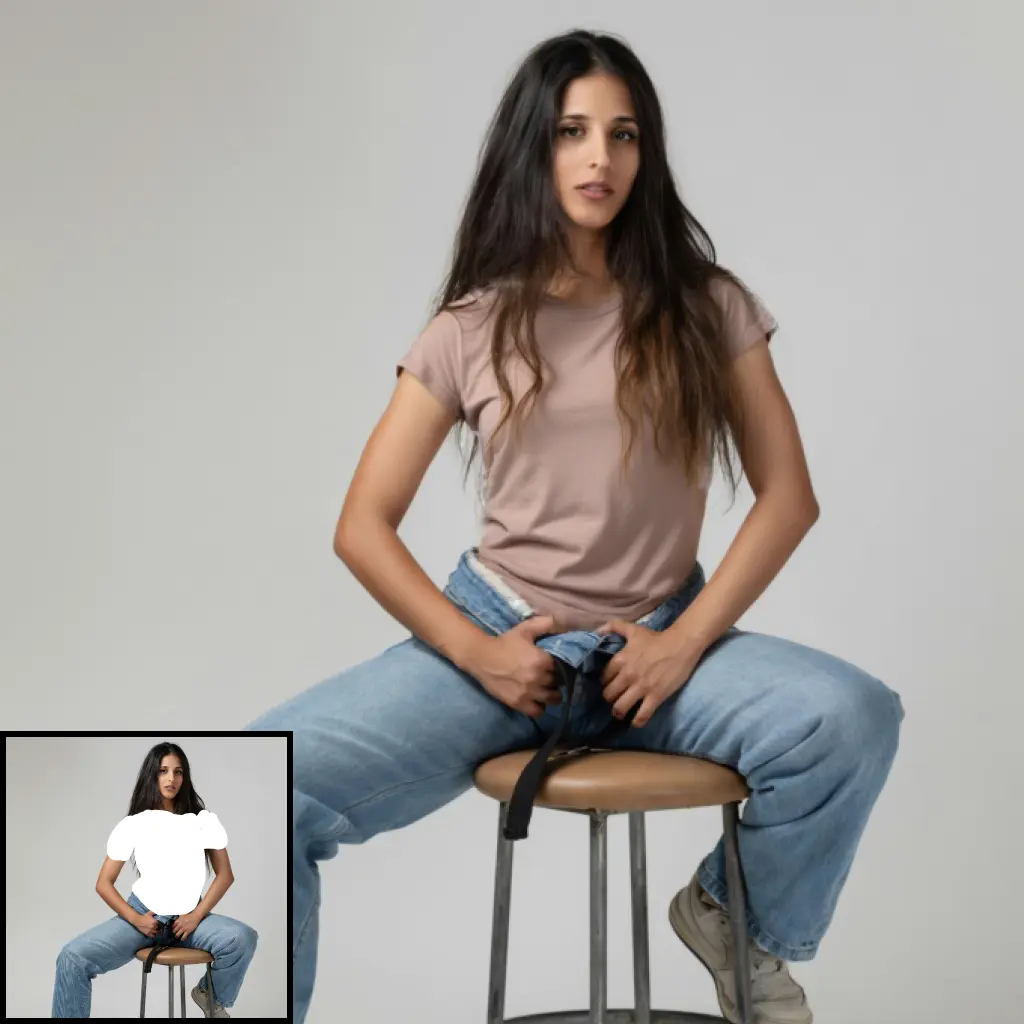
Latent-Aligned Mask (No VAE):
The LatentAlignedMaskSimple node is designed to facilitate the alignment of masks within the latent space without the need for a Variational Autoencoder (VAE). This node is particularly beneficial for AI artists who wish to manipulate and process masks directly in the latent space, allowing for more efficient and streamlined workflows. By bypassing the VAE, the node simplifies the process, making it more accessible to users who may not have a deep technical background. The primary goal of this node is to provide a straightforward method for aligning masks, ensuring that they are accurately positioned and scaled within the latent space. This capability is crucial for tasks that require precise mask manipulation, such as image editing and enhancement, where maintaining the integrity of the mask's alignment is essential.
Latent-Aligned Mask (No VAE) Input Parameters:
mask
The mask parameter represents the initial mask that you wish to align within the latent space. This mask serves as the starting point for the alignment process, and its quality and accuracy can significantly impact the final results. There are no specific minimum or maximum values for this parameter, as it is dependent on the input image or data you are working with.
compression_factor
The compression_factor parameter determines the degree to which the mask is compressed during the alignment process. A higher compression factor can lead to a more compact representation of the mask, which may be beneficial for certain applications. The default value is 8, and it can be adjusted based on your specific needs.
expansion_pixels
The expansion_pixels parameter controls the number of pixels by which the mask is expanded during the alignment process. This expansion helps ensure that the mask covers the desired area in the latent space. The default value is 8 pixels, but you can modify it to achieve the desired level of coverage.
blur_latent_units
The blur_latent_units parameter specifies the amount of blurring applied to the mask in the latent space. Blurring can help smooth out any rough edges or artifacts that may be present in the mask, resulting in a cleaner and more polished final output. The default value is 1, and you can adjust it to achieve the desired level of smoothness.
threshold
The threshold parameter sets the threshold level for the mask alignment process. This threshold determines which parts of the mask are considered significant and should be retained during the alignment. The default value is 0.5, and you can adjust it to fine-tune the sensitivity of the alignment process.
Latent-Aligned Mask (No VAE) Output Parameters:
aligned_mask
The aligned_mask output parameter represents the mask that has been successfully aligned within the latent space. This aligned mask is the result of the processing and adjustments made by the node, ensuring that it is accurately positioned and scaled for further use in your projects.
latent_preview
The latent_preview output parameter provides a preview of the mask within the latent space. This preview allows you to visualize how the mask appears after alignment, giving you a better understanding of the adjustments made and helping you make any necessary refinements.
Latent-Aligned Mask (No VAE) Usage Tips:
- Experiment with the
compression_factorto find the right balance between mask detail and processing efficiency for your specific project needs. - Use the
expansion_pixelsparameter to ensure that your mask covers the desired area in the latent space, especially if you are working with complex or detailed masks. - Adjust the
blur_latent_unitsto smooth out any rough edges in your mask, which can be particularly useful for achieving a polished final output.
Latent-Aligned Mask (No VAE) Common Errors and Solutions:
Mask alignment failure
- Explanation: This error may occur if the input mask is not compatible with the alignment process or if the parameters are not set correctly.
- Solution: Ensure that the input mask is properly formatted and try adjusting the
compression_factor,expansion_pixels, andthresholdparameters to achieve a successful alignment.
Unexpected output in latent preview
- Explanation: The latent preview may not appear as expected if the parameters are not optimally configured.
- Solution: Review and adjust the
blur_latent_unitsandthresholdparameters to improve the quality and accuracy of the latent preview.