



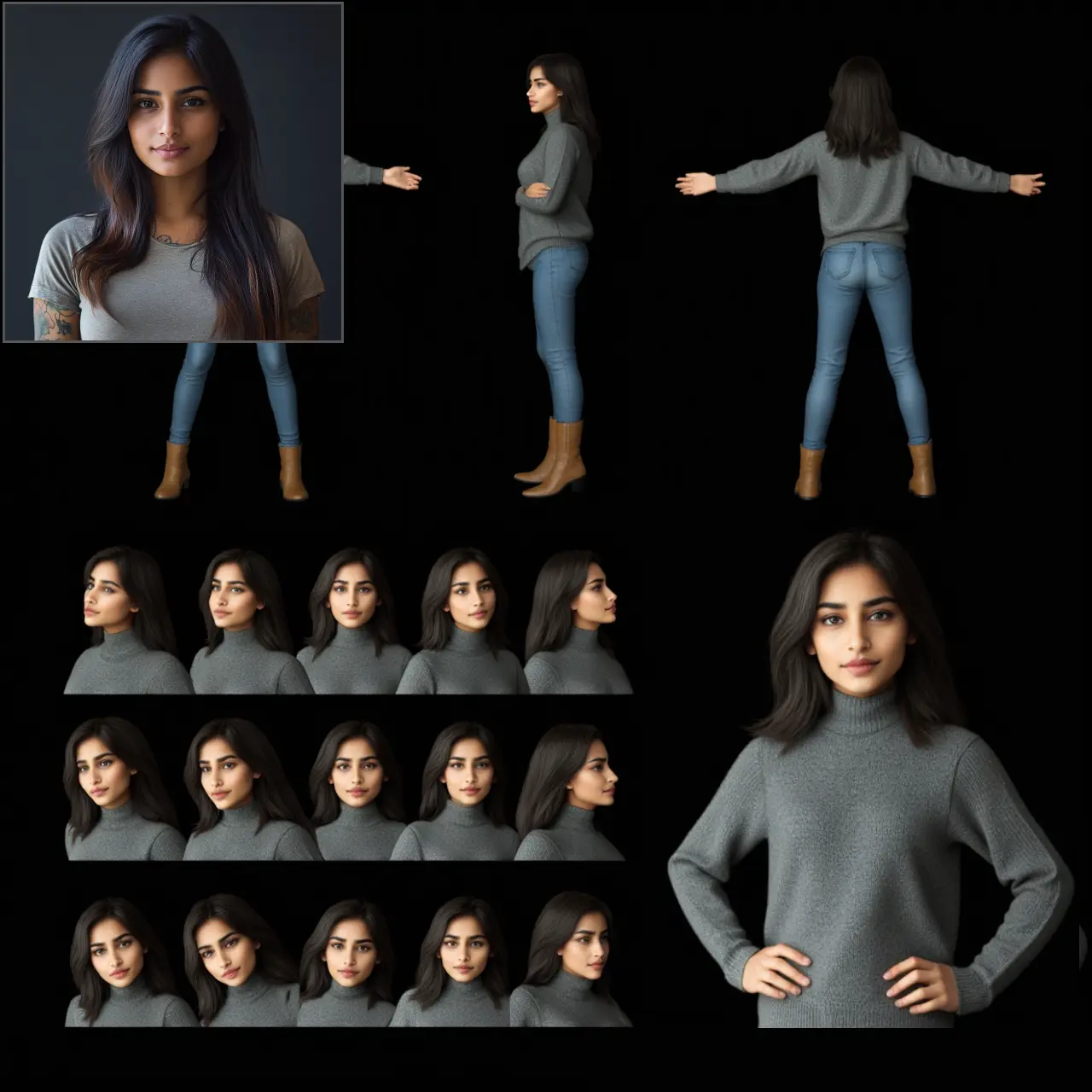

ComfyUI Node: FF: Visualize Faces
FaceDataVisualizer
CategoryFaceFusion
huygiatrng (Account age: 2009days) Extension
Facefusion_comfyui Latest Updated
2025-11-30 Github Stars
0.04K
How to Install Facefusion_comfyui
Install this extension via the ComfyUI Manager by searching for Facefusion_comfyui- 1. Click the Manager button in the main menu
- 2. Select Custom Nodes Manager button
- 3. Enter Facefusion_comfyui in the search bar
Visit ComfyUI Online for ready-to-use ComfyUI environment
- Free trial available
- 16GB VRAM to 80GB VRAM GPU machines
- 400+ preloaded models/nodes
- Freedom to upload custom models/nodes
- 200+ ready-to-run workflows
- 100% private workspace with up to 200GB storage
- Dedicated Support
FF: Visualize Faces Description
Enhances facial data visualization by overlaying landmarks and bounding boxes on images.
FF: Visualize Faces:
The FaceDataVisualizer is a specialized node designed to enhance the visualization of facial data by overlaying key facial features such as landmarks and bounding boxes onto images. This node is particularly beneficial for AI artists and developers who work with facial recognition or modification tasks, as it provides a clear and intuitive way to see how facial data is interpreted and processed by AI models. By visualizing these elements, you can gain insights into the accuracy and effectiveness of facial detection algorithms, making it easier to refine and improve your models. The primary goal of the FaceDataVisualizer is to offer a straightforward method to visually assess and debug facial data, ensuring that the AI's understanding of facial features aligns with your expectations.
FF: Visualize Faces Input Parameters:
face_data
The face_data parameter is a dictionary that contains the image and associated facial information. This includes the image itself and any detected faces, each with their respective landmarks and bounding boxes. This parameter is crucial as it serves as the primary input for the visualization process, allowing the node to access and display the relevant facial features.
draw_landmarks
The draw_landmarks parameter is a boolean that determines whether facial landmarks should be drawn on the image. When set to True, the node will overlay small circles on the image at each landmark point, providing a visual representation of key facial features such as eyes, nose, and mouth. This helps in assessing the precision of landmark detection.
draw_bbox
The draw_bbox parameter is a boolean that specifies whether bounding boxes should be drawn around detected faces. When enabled, the node will draw rectangles around each face, which can help in evaluating the accuracy of face detection and the size of the detected regions.
FF: Visualize Faces Output Parameters:
output_tensor
The output_tensor is the primary output of the node, representing the image with the visualized facial data. This tensor includes the original image with any specified landmarks and bounding boxes overlaid, providing a comprehensive view of the detected facial features. This output is essential for visually verifying the results of facial detection and landmark placement.
FF: Visualize Faces Usage Tips:
- To effectively use the
FaceDataVisualizer, ensure that yourface_datainput is well-structured and contains accurate facial information. This will enhance the quality of the visualizations. - Experiment with enabling or disabling the
draw_landmarksanddraw_bboxoptions to focus on specific aspects of facial data, depending on your current needs or the specific task at hand.
FF: Visualize Faces Common Errors and Solutions:
No faces in face_data
- Explanation: This error occurs when the
face_datainput does not contain any detected faces, which means there is no data to visualize. - Solution: Ensure that the face detection process is correctly implemented and that the
face_datainput includes detected faces before passing it to theFaceDataVisualizer.
Face index out of range
- Explanation: This error happens when the specified face index exceeds the number of detected faces in the
face_data. - Solution: Verify the number of faces detected and adjust the face index accordingly, ensuring it falls within the valid range of detected faces.
FF: Visualize Faces Related Nodes
RunComfy is the premier ComfyUI platform, offering ComfyUI online environment and services, along with ComfyUI workflows featuring stunning visuals. RunComfy also provides AI Models, enabling artists to harness the latest AI tools to create incredible art.