



IPAdapter FaceID V2:
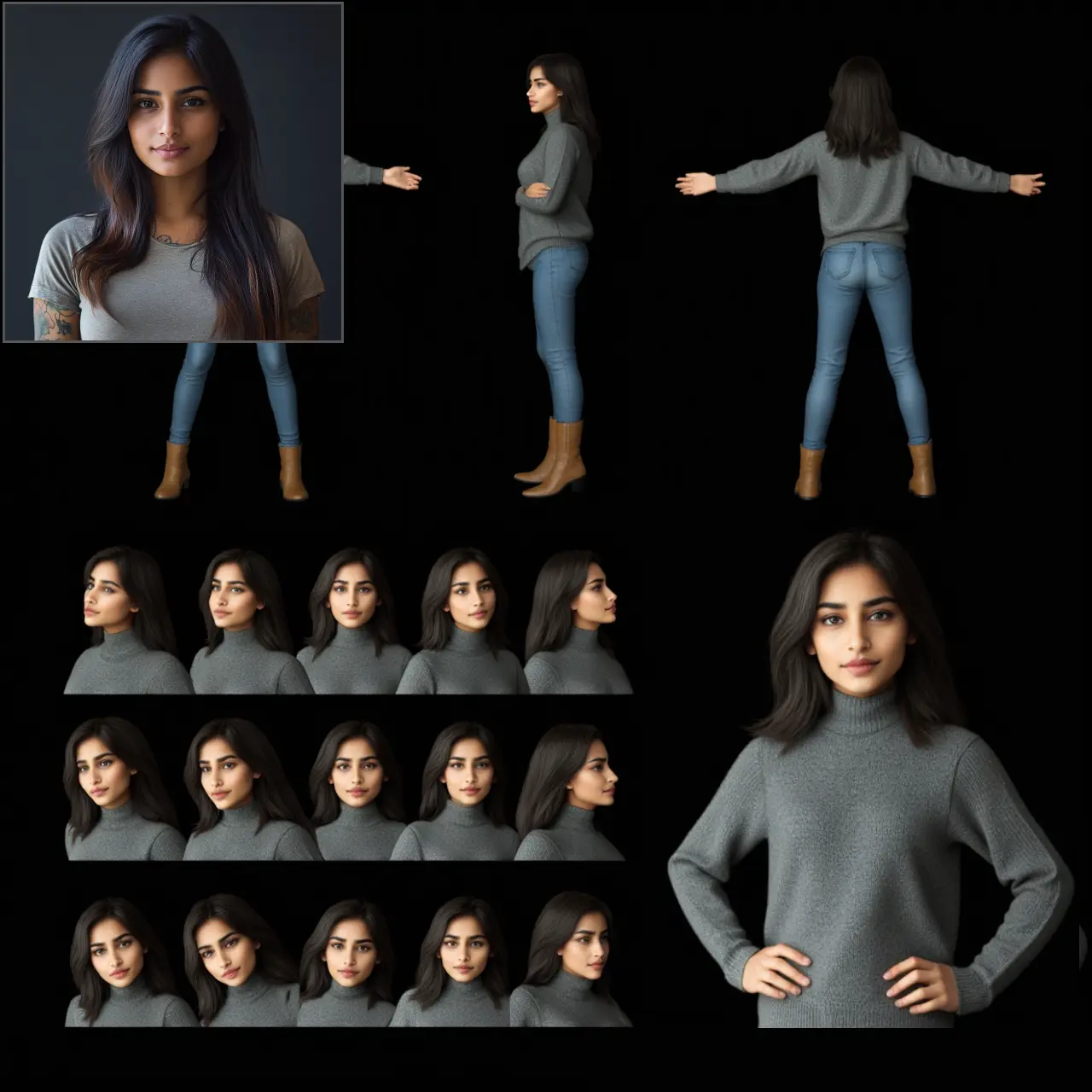
The IPAdapterFaceIDV2 node is designed to enhance image processing tasks by integrating advanced face identification capabilities into the IPAdapter framework. This node is particularly beneficial for applications that require precise facial recognition and manipulation, such as style transfer or portrait enhancement. By leveraging the power of the IPAdapter system, it allows for the seamless combination of facial features with other image attributes, providing a robust solution for artists and developers looking to incorporate sophisticated face-based transformations into their projects. The node's primary goal is to facilitate the integration of face identification with other image processing techniques, ensuring high-quality results and flexibility in artistic expression.
IPAdapter FaceID V2 Input Parameters:
model
This parameter specifies the model to be used for processing. It is a required input that determines the underlying architecture and capabilities of the node. The model choice can significantly impact the quality and style of the output image.
ipadapter
The ipadapter parameter refers to the specific IPAdapter configuration being utilized. It is essential for defining how the node interacts with the image data and other components within the IPAdapter framework.
image
This parameter represents the input image that will be processed by the node. It is a crucial component as it serves as the base for all transformations and enhancements performed by the node.
weight
The weight parameter controls the influence of the IPAdapter on the image processing task. It ranges from -1 to 3, with a default value of 1.0. Adjusting this weight can alter the intensity of the applied transformations, allowing for fine-tuning of the output.
weight_faceidv2
This parameter specifically adjusts the strength of the face identification component within the node. It ranges from -1 to 5.0, with a default value of 1.0. Increasing this weight enhances the prominence of facial features in the output.
weight_type
The weight_type parameter defines the method of weighting used in the processing. It allows for customization of how different components are balanced during the transformation process.
combine_embeds
This parameter offers several options for combining embeddings, including "concat", "add", "subtract", "average", and "norm average". It determines how different image features are integrated, affecting the overall style and composition of the output.
start_at
The start_at parameter specifies the starting point of the transformation process, ranging from 0.0 to 1.0 with a default of 0.0. It allows for control over when the processing begins, which can be useful for creating gradual effects.
end_at
This parameter defines the endpoint of the transformation, also ranging from 0.0 to 1.0 with a default of 1.0. It complements the start_at parameter by setting the duration of the effect, enabling precise control over the transformation timeline.
embeds_scaling
The embeds_scaling parameter provides options for scaling embeddings, such as 'V only', 'K+V', 'K+V w/ C penalty', and 'K+mean(V) w/ C penalty'. This affects how the embeddings are adjusted during processing, influencing the final output's style and detail.
image_negative
An optional parameter that allows for the inclusion of a negative image, which can be used to counterbalance or negate certain features in the input image, providing more control over the final result.
attn_mask
This optional parameter provides an attention mask that can guide the focus of the transformation process, ensuring that specific areas of the image receive more or less attention during processing.
clip_vision
The clip_vision parameter is optional and integrates CLIP vision capabilities into the node, enhancing its ability to understand and manipulate visual content based on textual descriptions.
insightface
An optional parameter that incorporates InsightFace technology, further enhancing the node's facial recognition and manipulation capabilities by leveraging advanced face analysis techniques.
IPAdapter FaceID V2 Output Parameters:
MODEL
The MODEL output represents the processed model after the node has applied its transformations. It reflects the changes made to the input model, incorporating the specified weights and parameters.
face_image
The face_image output is the resulting image after processing, showcasing the applied transformations and enhancements. It is the primary visual output of the node, demonstrating the effects of the face identification and other adjustments.
IPAdapter FaceID V2 Usage Tips:
- Experiment with different
weightandweight_faceidv2values to achieve the desired balance between facial features and other image attributes. - Utilize the
combine_embedsoptions to explore various styles and compositions, allowing for creative and unique outputs. - Adjust the
start_atandend_atparameters to create dynamic transformations that evolve over time, adding depth and interest to your images.
IPAdapter FaceID V2 Common Errors and Solutions:
Error: "Invalid model input"
- Explanation: This error occurs when the specified model is not compatible with the node's requirements.
- Solution: Ensure that the model input is correctly specified and compatible with the IPAdapter framework.
Error: "Weight out of range"
- Explanation: The weight parameters have been set outside their allowable range.
- Solution: Adjust the
weightandweight_faceidv2parameters to fall within their specified ranges.
Error: "Missing required image input"
- Explanation: The node requires an image input to function, which has not been provided.
- Solution: Ensure that a valid image is supplied to the
imageparameter before executing the node.