



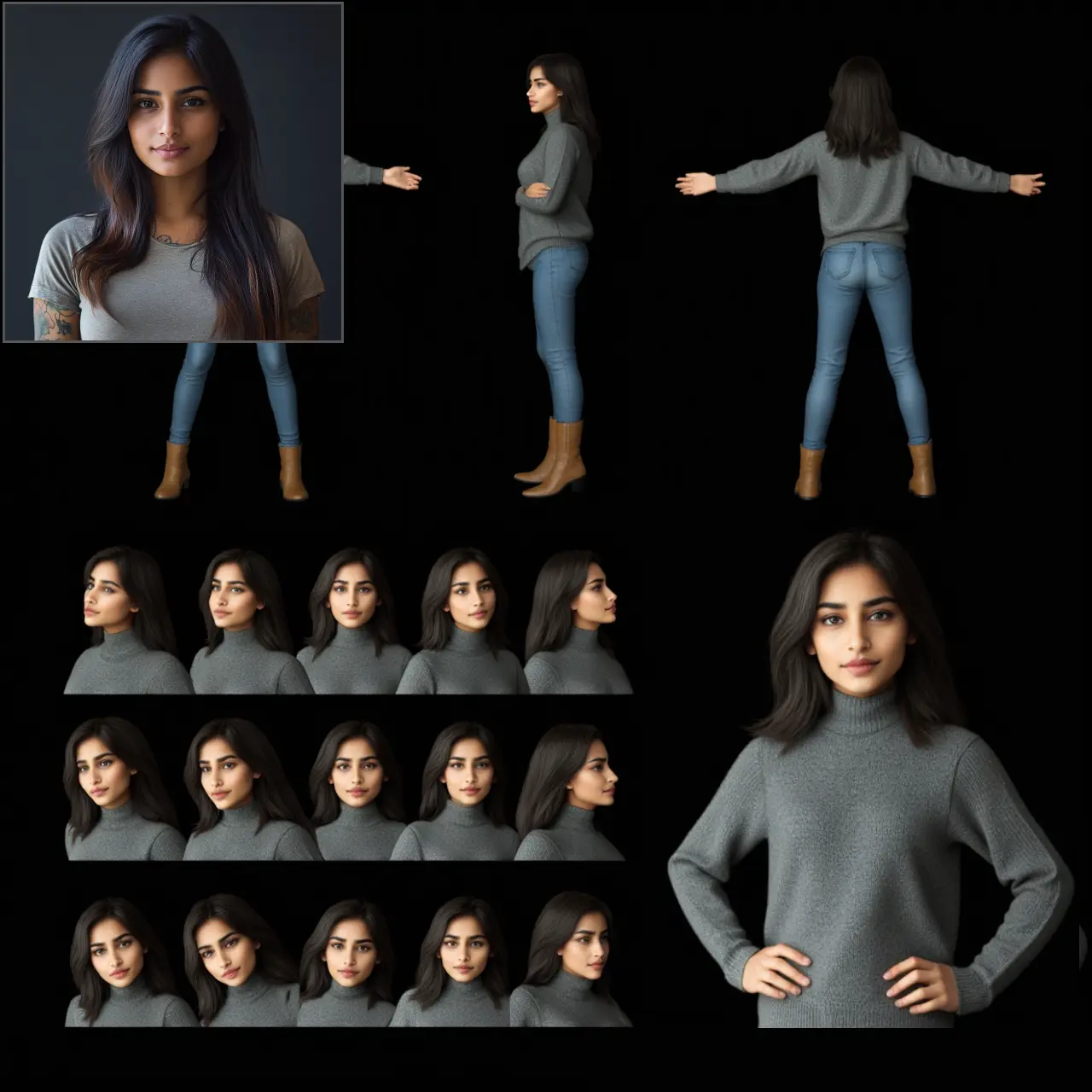

Capitan Enhancer (Basic):
The ConditioningEnhancer node is designed to refine and enhance conditioning data, which is crucial in AI art generation processes. Its primary purpose is to improve the quality and effectiveness of conditioning inputs by applying a series of transformations and enhancements. This node leverages techniques such as normalization, multi-layer perceptron (MLP) transformations, and optional self-attention mechanisms to refine the input data. By doing so, it aims to boost the detail and overall quality of the generated outputs, making it an essential tool for artists looking to achieve more nuanced and sophisticated results in their AI-generated artworks. The node is particularly beneficial for users who wish to enhance the expressiveness and depth of their conditioning data, thereby enabling more creative and precise control over the artistic output.
Capitan Enhancer (Basic) Input Parameters:
conditioning
This parameter represents the input conditioning data that the node will enhance. It is crucial as it forms the basis of the enhancement process, and its quality directly impacts the final output. The conditioning data typically consists of embeddings that guide the AI model in generating art.
enhance_strength
Enhance strength determines the intensity of the enhancement applied to the conditioning data. A higher value results in more pronounced enhancements, while a lower value applies subtler changes. This parameter allows you to control the degree of refinement, with typical values ranging from 0.0 to 1.0.
normalize
The normalize parameter is a boolean flag that, when set to true, normalizes the conditioning data. Normalization helps in stabilizing the data by adjusting its mean and standard deviation, which can lead to more consistent and reliable enhancements.
add_self_attention
This boolean parameter enables the addition of a self-attention mechanism to the enhancement process. Self-attention can improve the model's ability to focus on different parts of the conditioning data, enhancing the overall quality and detail of the output. It is particularly useful when not operating in low VRAM mode.
mlp_hidden_mult
This parameter specifies the multiplier for the hidden layer size in the MLP transformation. It affects the complexity and capacity of the MLP, with higher values allowing for more intricate transformations. The typical range is from 1.0 to 4.0, depending on the desired level of enhancement.
seed
The seed parameter sets the random seed for the enhancement process, ensuring reproducibility of results. By using the same seed, you can achieve consistent outputs across different runs, which is essential for iterative artistic processes.
low_vram
This boolean parameter indicates whether the node should operate in a low VRAM mode, which is useful for systems with limited memory resources. When enabled, it adjusts the computation to be more memory-efficient, potentially at the cost of some performance.
device
The device parameter specifies the computational device to be used, such as "cpu" or "cuda". It allows you to choose the hardware that best suits your performance needs, with "cuda" being preferred for faster processing on compatible GPUs.
Capitan Enhancer (Basic) Output Parameters:
enhanced
The enhanced output parameter contains the refined conditioning data after the enhancement process. This data is crucial for guiding the AI model in generating high-quality art, as it incorporates the applied transformations and enhancements, resulting in more expressive and detailed outputs.
Capitan Enhancer (Basic) Usage Tips:
- Experiment with the
enhance_strengthparameter to find the right balance between subtle and pronounced enhancements for your specific artistic goals. - Utilize the
normalizeoption to stabilize your conditioning data, especially if you notice inconsistencies in the output quality. - Consider enabling
add_self_attentionfor more complex and detailed enhancements, particularly when working with intricate conditioning data. - Use the
seedparameter to ensure reproducibility of your results, which is helpful for iterative design processes.
Capitan Enhancer (Basic) Common Errors and Solutions:
"CUDA out of memory"
- Explanation: This error occurs when the GPU does not have enough memory to process the enhancement.
- Solution: Enable the
low_vrammode to reduce memory usage or try using a smaller batch size.
"Invalid device string"
- Explanation: The specified device is not recognized or available.
- Solution: Ensure that the
deviceparameter is set to a valid option, such as "cpu" or "cuda".
"Normalization failed due to zero standard deviation"
- Explanation: This error can occur if the conditioning data has no variation.
- Solution: Check the input data for anomalies and consider adjusting the
normalizeparameter.