




Smart DeNoise FX (CRT):
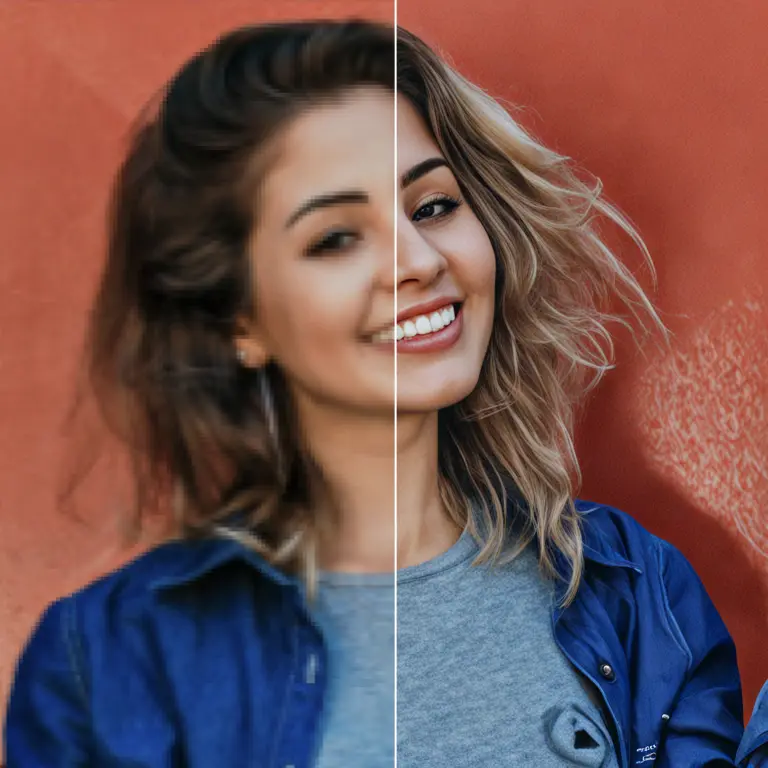
SmartDeNoiseFX is a sophisticated node designed to enhance image quality by reducing noise while preserving essential details. It employs a method that combines spatial and color-based weighting to selectively smooth out noise without compromising the integrity of the image's features. This node is particularly beneficial for AI artists who want to refine their images, ensuring that the final output is clean and visually appealing. By adjusting parameters such as sigma, threshold, and radius multiplier, you can control the extent of denoising, making it versatile for various artistic needs. The primary goal of SmartDeNoiseFX is to provide a balance between noise reduction and detail preservation, making it an essential tool for achieving high-quality image outputs.
Smart DeNoise FX (CRT) Input Parameters:
image
The image parameter is the input image that you want to denoise. It is expected to be in the form of a tensor, which is a multi-dimensional array used to represent the image data. This parameter is crucial as it serves as the base upon which the denoising process is applied.
sigma
The sigma parameter controls the amount of smoothing applied to the image. It determines the standard deviation of the Gaussian function used in the spatial weighting process. A higher sigma value results in more aggressive noise reduction, which can lead to a smoother image but may also blur fine details. The default value is 1.25, with a range from 0.001 to 8.0, allowing for precise adjustments based on the level of noise present in the image.
threshold
The threshold parameter influences the sensitivity of the denoising process to color differences. It sets the threshold for the color-based weighting, determining how much color variation is tolerated before being considered noise. A lower threshold value makes the node more sensitive to color differences, preserving more details, while a higher value allows for more noise reduction. The default value is 0.05, with a range from 0.001 to 0.25.
radius_multiplier
The radius_multiplier parameter affects the size of the area considered around each pixel during the denoising process. It multiplies the sigma value to determine the radius of the neighborhood used for calculating spatial and color weights. A larger radius can enhance the denoising effect but may also increase computational time. The default value is 1.5, with a range from 0.0 to 3.0.
Smart DeNoise FX (CRT) Output Parameters:
IMAGE
The output parameter IMAGE is the denoised version of the input image. It is returned as a tensor, representing the processed image data. This output is crucial as it provides the final result of the denoising process, showcasing a cleaner and more refined image with reduced noise and preserved details.
Smart DeNoise FX (CRT) Usage Tips:
- Experiment with the
sigmaparameter to find the right balance between noise reduction and detail preservation. Start with the default value and adjust based on the noise level in your image. - Use the
thresholdparameter to control the sensitivity to color variations. Lower values are ideal for images with subtle color differences that you want to maintain. - Adjust the
radius_multiplierto fine-tune the area of influence around each pixel. Larger values can improve denoising but may increase processing time, so find a balance that suits your needs.
Smart DeNoise FX (CRT) Common Errors and Solutions:
RuntimeError: CUDA error: out of memory
- Explanation: This error occurs when the GPU runs out of memory while processing the image, often due to large image sizes or high parameter values.
- Solution: Try reducing the image size or lowering the
sigmaandradius_multipliervalues to decrease memory usage.
ValueError: Expected input image to be a tensor
- Explanation: This error indicates that the input provided is not in the expected tensor format.
- Solution: Ensure that the input image is correctly formatted as a tensor before passing it to the node.
IndexError: Dimension out of range
- Explanation: This error can occur if the input image tensor does not have the expected dimensions.
- Solution: Verify that the input image tensor has the correct shape, typically (batch_size, height, width, channels), and adjust if necessary.